





Goat vs cow vs deer leather: which Lederhosen leather is right for you?

Get a $10 store credit for your first order
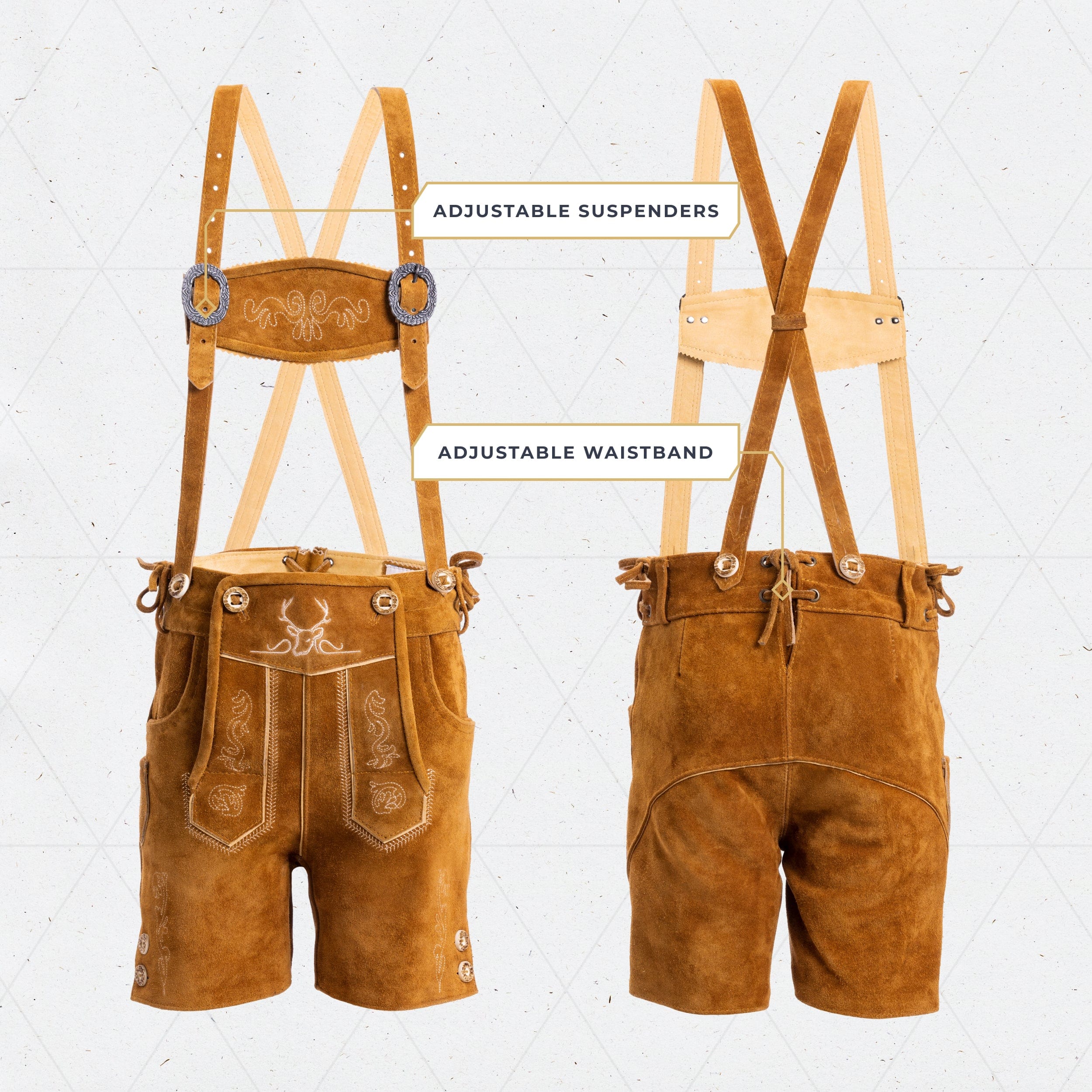
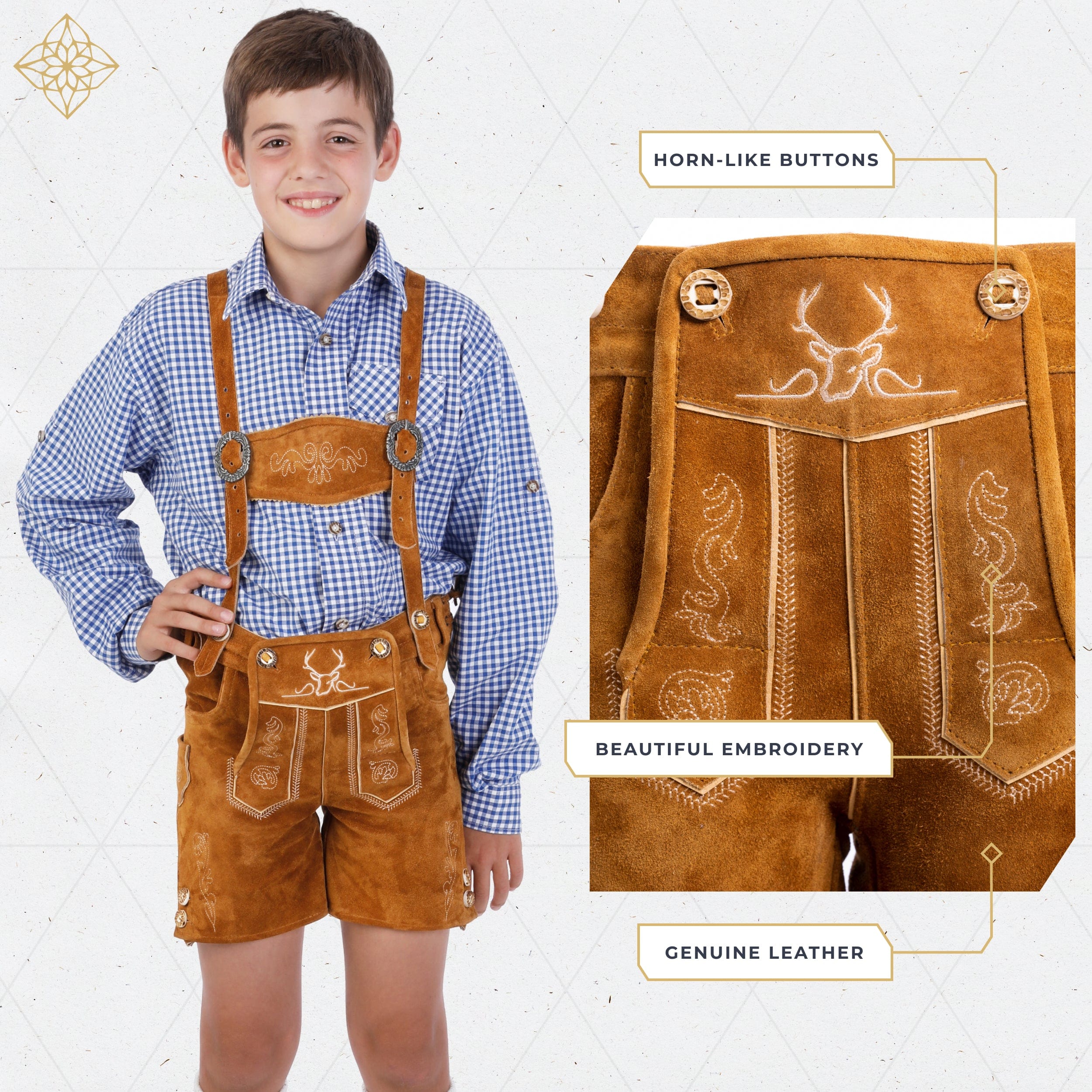
If you've ever stood in a traditional Bavarian shop or spent hours scrolling through leather Lederhosen online, you've probably noticed that not all leather is created equal. The word Lederhosen literally means "leather trousers" in German, but the material used to make Lederhosen makes an enormous difference in how they look, feel, wear in, and last over decades of Oktoberfest celebrations, alpine hikes, and everything in between.
Whether you're a first-time buyer putting together the perfect Oktoberfest men outfit or a seasoned enthusiast looking to upgrade to genuine leather Lederhosen, this guide will help you make the right call. Spoiler: while deer leather gets a lot of attention, goat leather and cow leather are the choices that most buyers and most traditional craftsmen swear by for real-world wear. Let's explore why.
A Brief History of Lederhosen Leather
Before we compare, it helps to understand why leather became the defining material used to make Lederhosen in the first place. Bavarian peasants and hunters in the 18th century needed durable, breathable workwear that could withstand rugged outdoor conditions. Leather fit the bill perfectly and the type of leather depended largely on what animals were available locally.
In the alpine regions where traditional Lederhosen originated, deer and goat were plentiful, making deer leather Lederhosen and goat leather Lederhosen the earliest iterations of the garment. As industrialization spread, cow leather became dominant thanks to its affordability and wide availability. Today, all three types remain in use, each carrying distinct qualities that cater to different wearers of men's leather Lederhosen.
1. Goat Leather (Ziegenleder)
The Superior Traditional Choice
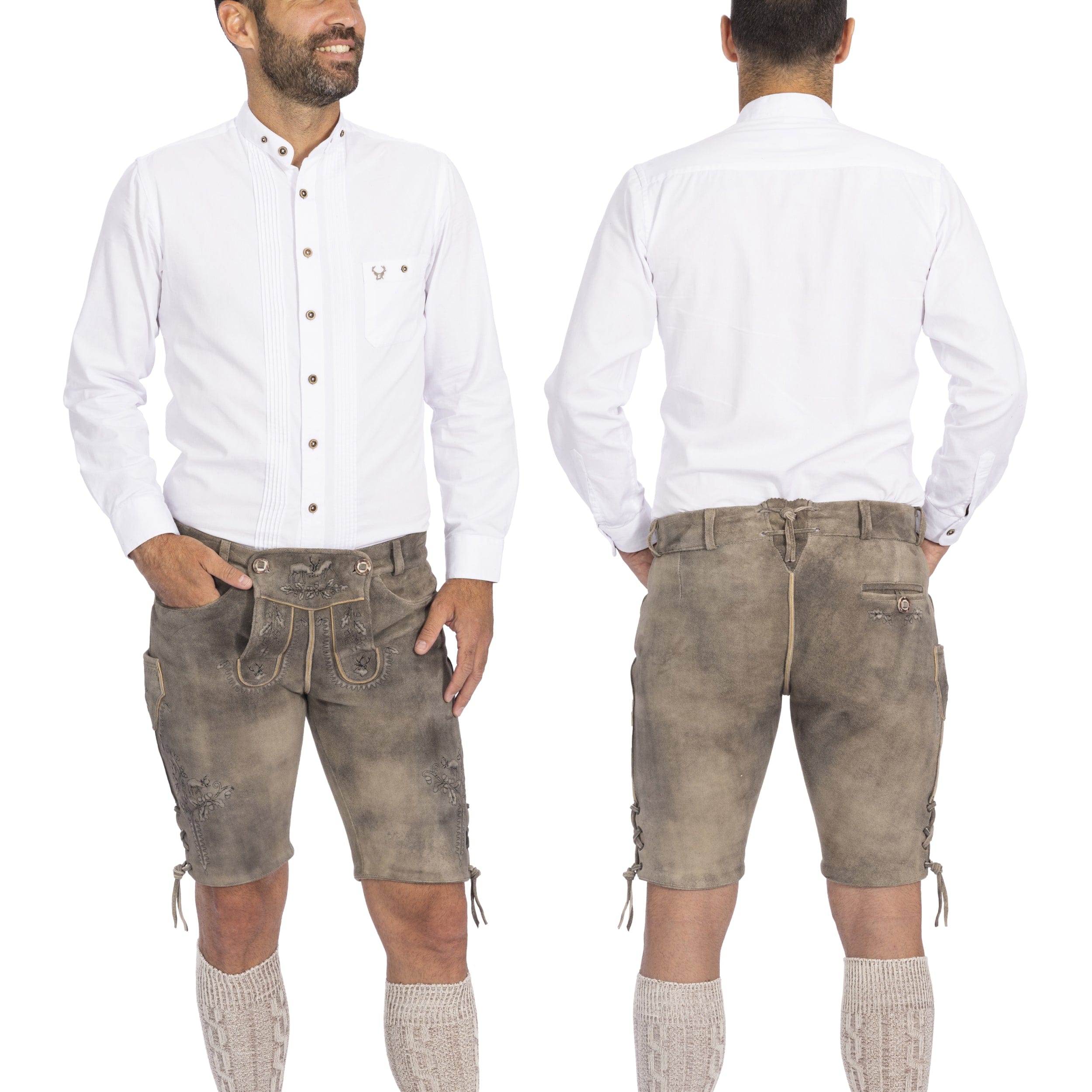
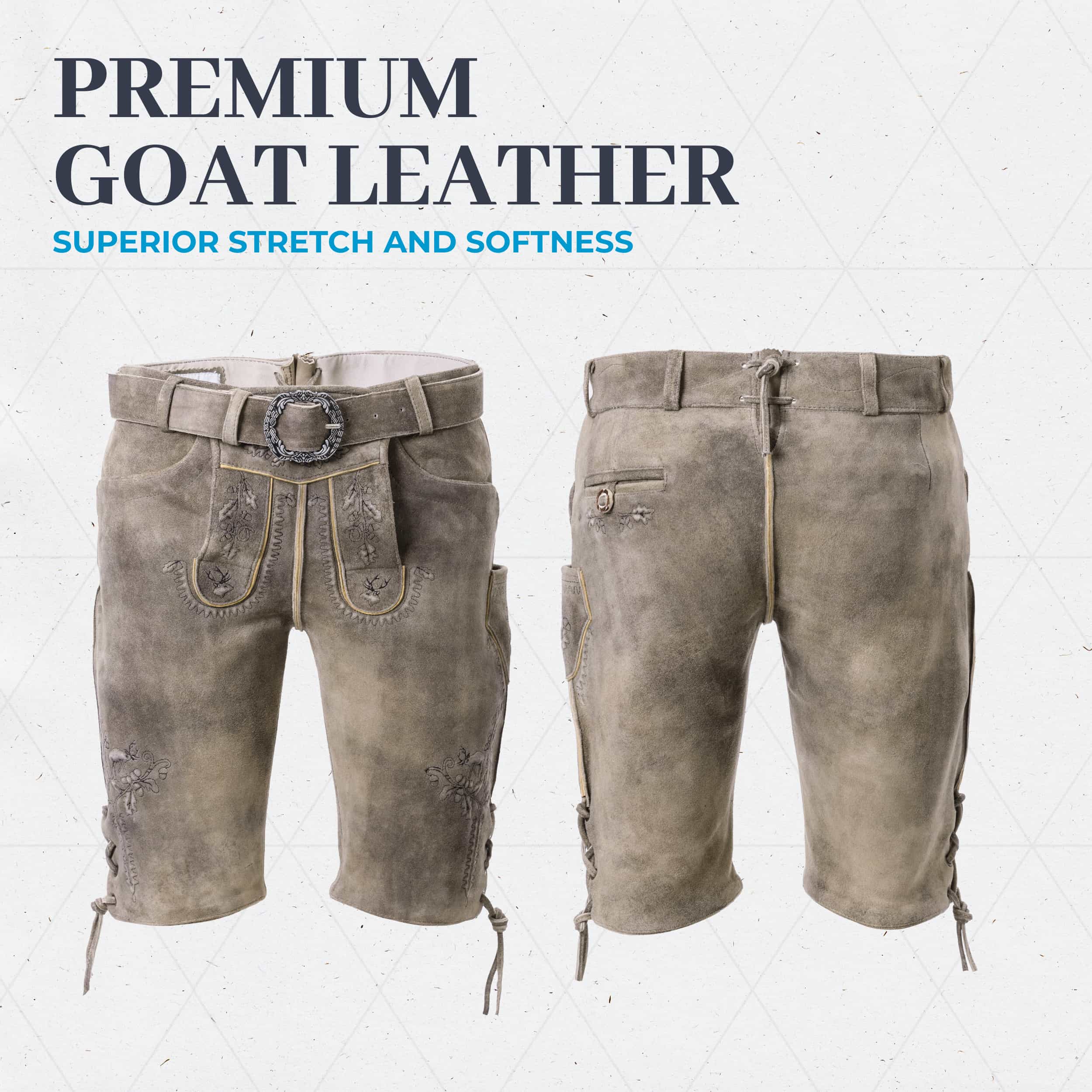
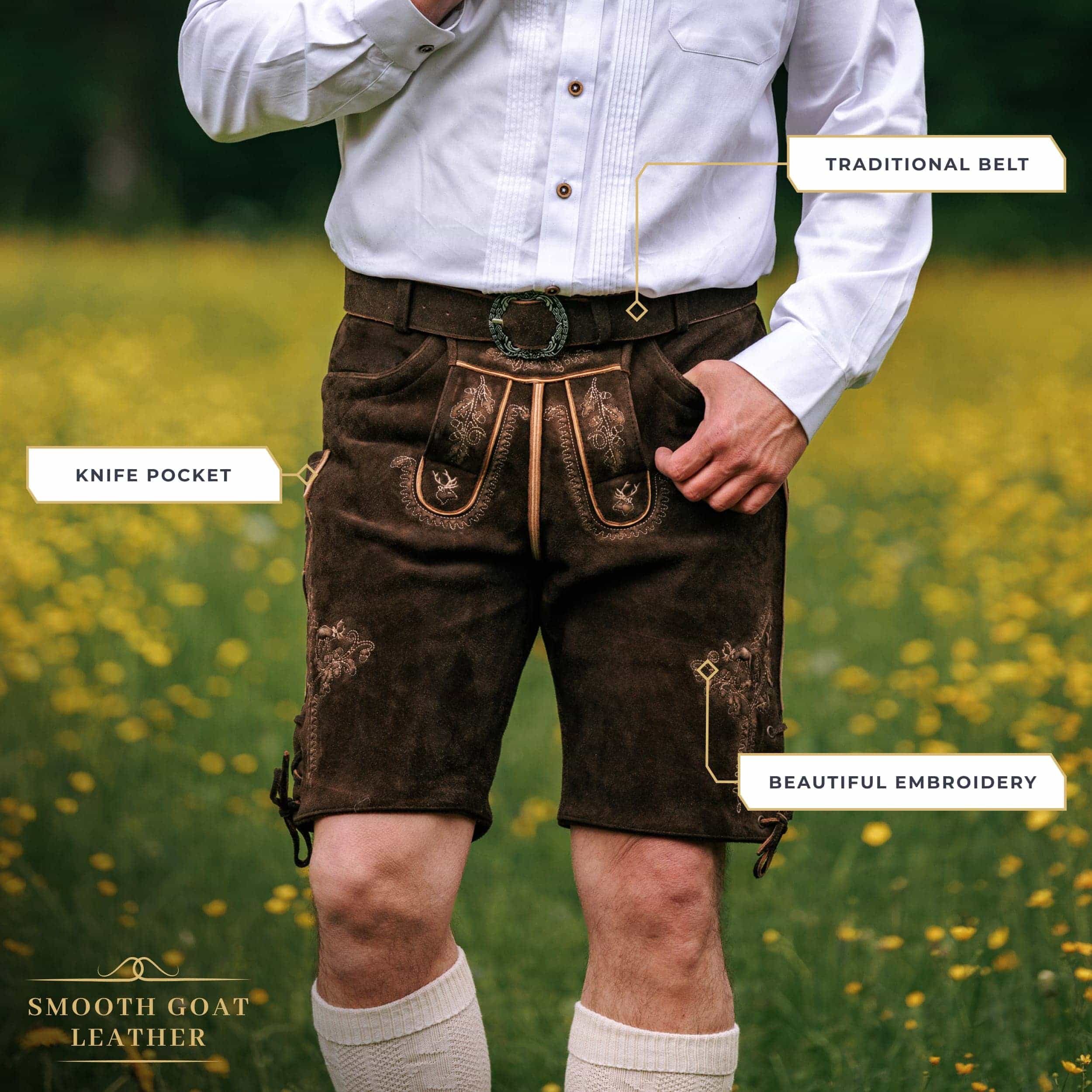
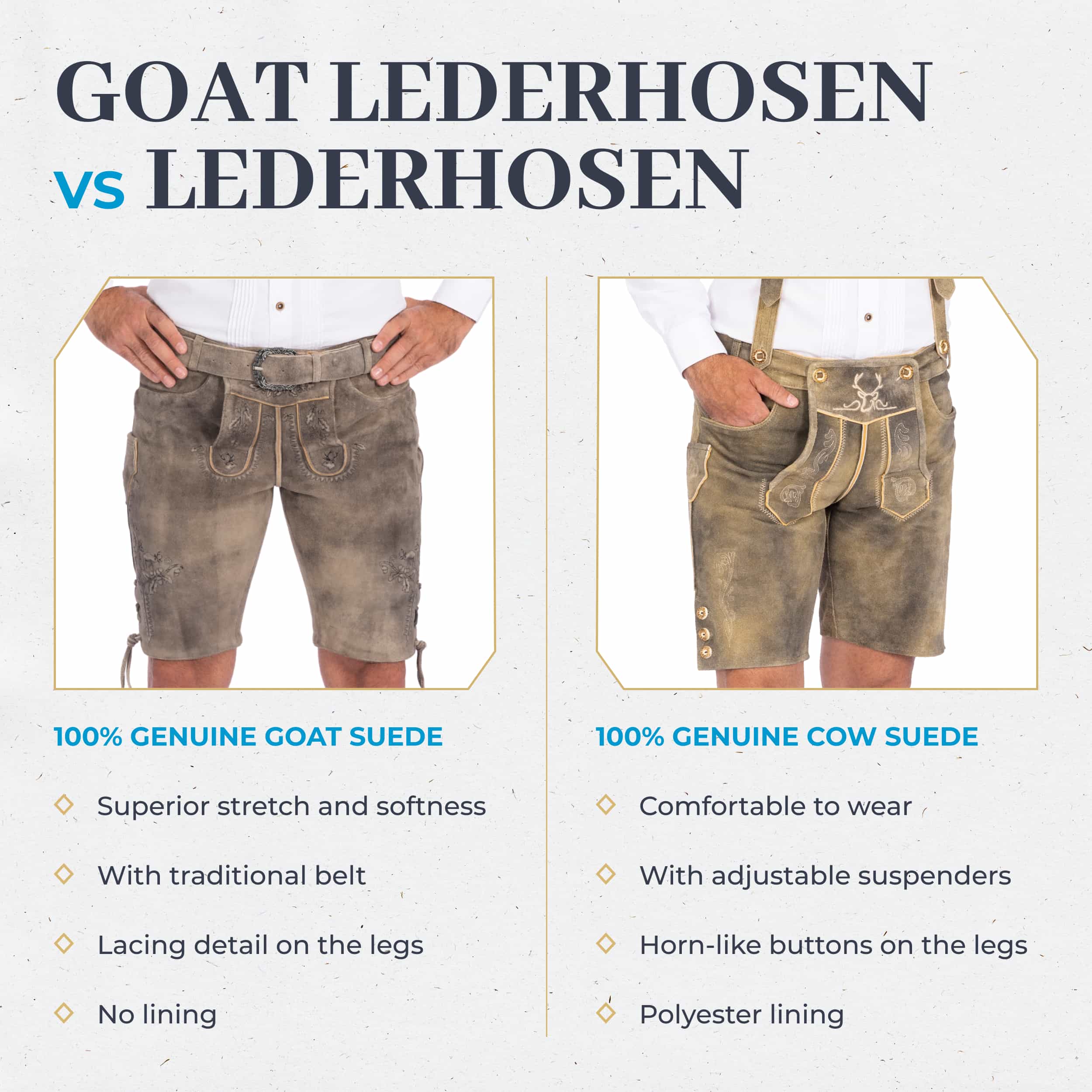
Goat leather - Ziegenleder - is the most historically authentic material used to make Lederhosen, and for good reason: it perfectly balances everyday wearability with genuine durability. Goat leather Lederhosen outperforms deer leather in almost every practical category, making them the go-to choice for buyers who want traditional Lederhosen that actually hold up to real life.
Feel & Texture
Goat leather has a distinctive fine grain that gives Lederhosen a refined, premium look while remaining far more resilient than deerskin. Unlike deer leather Lederhosen, the surface resists scuffs and surface marks far better. After the short break-in period just a few wearing goat leather Lederhosen became exceptionally comfortable.
Breathability
Goat leather breathes significantly better than cow leather and crucially far better than the dense, synthetic-feeling alternatives on the market. For a full-day Oktoberfest men's outfit in variable autumn weather, goat leather Lederhosen keep you comfortable without the overheating risk of heavier hides.
Durability & Aging
Here's where goat leather Lederhosen genuinely outshine deer leather: durability. Goat leather resists abrasion, moisture, and daily wear far better than deerskin, making it a vastly more practical choice for real-world use. A well-made pair of goat leather Lederhosen will look sharp festival after festival, developing a quiet, distinguished character over the years.
2. Cow Leather (Rindsleder)
The Definitive Choice for Most Men
Cow leather -Rindsleder is the most widely used and trusted material used to make Lederhosen in Bavaria today, and it's earned that position. When it comes to leather Lederhosen, men actually want to wear year after year, cow leather delivers unmatched durability, dramatic aging, and reliable weather resistance that no other hide can match. For Bavarian Lederhosen that truly stand the test of time, cowhide is the benchmark.
Feel & Texture
Fresh cow leather Lederhosen are noticeably stiffer than the other options. This is both a feature and a quirk: the break-in process is real, and for the first several wearings, Lederhosen made from cowhide can feel quite rigid. However, this is also part of the tradition Bavarian wearers take pride in eintragen, the process of wearing leather Lederhosen until they perfectly conform to the body.
Breathability
Cow leather is the least breathable of the three materials. Its density, which gives it strength, also means less airflow. For warm summer festivals this can be a consideration, but for cooler autumn events it's rarely a problem.
Durability & Aging
This is where cow leather wins decisively. Genuine leather Lederhosen made from cowhide are extremely tough and resistant to abrasion, water, and hard wear. A well-made pair can easily last a lifetime with reasonable care. The aging process is dramatic and beloved: cow leather develops a rich, deep patina over the years, with fading, creasing, and darkening in all the right places. Many collectors of Bavarian Lederhosen specifically seek out aged cowhide pairs for their earned, lived-in character.
3. Deer Leather (Hirschleder)
The Overhyped Option
Deerskin or Hirschleder in German has a prestigious reputation in the world of leather Lederhosen. You'll often see it marketed as the ultimate choice, and while it does have genuine qualities, the reality for most buyers is that its drawbacks significantly outweigh its appeal especially, when goat leather Lederhosen and cow leather alternatives offer so much more practical value.
Feel & Texture
Deer leather Lederhosen are undeniably soft from the start. The natural suede-like nap gives them a velvety feel straight out of the box. However, this softness comes at a cost: the delicate surface is far more prone to scuffing, staining, and surface damage than either goat leather or cow leather. What feels luxurious in the shop can start looking tired after just a season of regular festival wear.
Breathability
Deerskin breathes well but so does goatskin, without the fragility. And for a crisp autumn Oktoberfest men outfit, breathability matters far less than durability and weather resistance, where deer leather falls noticeably short.
Durability & Aging
This is the critical weakness of deer leather Lederhosen. Deerskin is significantly more vulnerable to water, abrasion, and everyday wear than both goat leather Lederhosen and cow leather options. A single rainy Oktoberfest day can damage an unprotected pair. The patina it develops over time is subtle at best lacking the rich, characterful aging that cow leather is famous for. For a garment meant to last generations, deerskin requires disproportionate care and caution.
Side-by-Side Comparison
|
Feature |
Goat Leather |
Cow Leather |
Deer Leather |
|
Softness out of box |
★★★★☆ |
★★☆☆☆ |
★★★★★ |
|
Break-in Time |
Short |
Moderate |
Minimal |
|
Breathability |
Excellent |
Fair |
Good |
|
Durability |
High |
Highest |
Low |
|
Water Resistance |
✅ Good |
✅ Excellent |
❌ Poor |
|
Aging/Patina |
Distinguished |
Dramatic & Rich |
Subtle |
|
Surface Resistance |
✅ Resilient |
✅ Very Resilient |
❌ Delicate |
|
Maintenance Effort |
Low |
Low |
High |
|
Value for Money |
✅ Excellent |
✅ Excellent |
❌ Poor |
|
Recommended |
✓ |
✓ |
✗ |
Buy the best leather Lederhosen from Bavaria Trachten https://bavariatrachten.com/collections/lederhosen-men
How to Clean Leather Lederhosen
Knowing how to clean leather Lederhosen properly is just as important
Here's a step-by-step guide on how to clean Lederhosen:
-
Regular Brushing: Start by using a soft-bristled brush to remove any dirt or debris from your Lederhosen.
-
Clean with Lukewarm Soapy Water: Fill a bucket with lukewarm water and add a small amount of mild soap. Avoid harsh detergents or bleach that can damage the leather.
-
Wipe Gently: Dip a soft cloth or sponge into the soapy water and gently wipe down your Lederhosen, focusing on stained or dirty areas.
-
Rinse Thoroughly: Rinse the cloth or sponge with clean water and wipe away any soap residue from your Lederhosen.
-
Avoid Direct Heat: Let your Lederhosen air dry completely. Never use a dryer or place them in direct sunlight, as heat can cause the leather to shrink or crack.
-
Condition the Leather: Once dry, apply a leather conditioner to keep the leather soft, supple, and protected for long-lasting wear.
The Verdict
The verdict is clear: goat leather and cow leather are the superior choices for anyone who wants genuine leather Lederhosen they can actually wear, enjoy, and pass down.
-
Deer leather Lederhosen look appealing on paper and in a shop but the fragility, weather sensitivity, and demanding maintenance make them a poor practical investment for most buyers. They're a niche choice for collectors, not everyday wearers.
-
Goat leather are the ideal choice for buyers who want breathable, authentic traditional Lederhosen with excellent durability, easy care, and a refined look. They outperform deerskin in every real-world category.
-
Cow leather is the undisputed champion of Bavarian Lederhosen for a reason: it's built to last a lifetime, ages into something spectacular, and handles everything festival life throws at it.
Whatever you choose between goat leather Lederhosen and cow leather, buy the best genuine leather Lederhosen you can afford from a reputable maker, follow the simple care routine for your leather type, and wear them with the pride they deserve.
Bavaria Trachten is all about Oktoberfest, tradition, and showing up in style. With deep German roots, we create authentic Oktoberfest outfits that bring Bavarian culture to life for celebrations across the U.S. and beyond.
Popular Posts
Products mentioned on this page:





Get a $10 store credit for your first order
Products mentioned on this page:


Leave a comment