





Traditional German Clothing: History Behind

Get a $10 store credit for your first order
When most people picture traditional German clothing, images of alpine meadows, festive beer halls, and colorful Oktoberfest celebrations come to mind. But the story behind German traditional clothing is far richer and more complex than a simple costume. Rooted in centuries of regional identity, social class, and cultural pride, German folk dress or Tracht tells the story of a nation through its fabric, embroidery, and cut.
In this guide, we'll explore the full traditional German clothing history, from its medieval origins to its modern revival, with a deep dive into the iconic garments worn by both men and women across Germany's diverse regions, especially Bavaria.
What Is Tracht? Understanding German Folk Dress
The German word Tracht (from the verb tragen, meaning "to wear" or "to carry") refers broadly to the traditional regional dress of German-speaking peoples. Unlike a single national costume, traditional German clothing varies significantly by region, era, and social status.
Tracht was not merely decorative. Historically, it served as a visual language:
-
Regional identity - The cut, color, and embroidery of a garment could identify which village or valley a person came from.
-
Social status - Fabric quality, number of petticoats, and jewelry all signaled wealth and class.
-
Marital status - Colors, apron styles, and hat types often indicated whether a woman was single, married, or widowed.
-
Occupation - Farmers, craftsmen, and herders each had distinct dress codes.
Understanding Tracht means understanding that German traditional clothing was a living, functional system, not simply a quaint relic.
Traditional German Clothing History: A Timeline
Medieval Origins (500–1500)
The earliest roots of German folk dress lie in the practical garments of medieval peasant and merchant classes. Wool tunics, linen undergarments, and leather breeches were everyday essentials. Wealthier classes adopted elements from French and Italian fashion, creating a social divide in dress that would persist for centuries.
Regional variation began to emerge during this period as feudal territories developed their own textile traditions, dye sources, and tailoring customs.
The Renaissance and Baroque Era (1500–1700)
The 16th and 17th centuries brought greater ornamentation to German dress, particularly for the upper and merchant classes. Embroidery became more elaborate, and specific garments began to take recognizable forms, precursors to what we now recognize as classic traditional German clothing.
The Dirndl dress in its earliest form emerged during this era as a peasant working dress in the Alpine regions of Bavaria and Austria.
The Romantic Revival (1800s)
The 19th century was arguably the most important period for traditional German clothing history. During the Romantic era, German intellectuals and nationalists began celebrating folk culture as an expression of national identity. The Trachtenvereine (folk costume associations) were founded to preserve and promote regional dress.
The German Bavarian outfit, particularly Lederhosen for men and the Dirndl for women, was codified and romanticized during this period. What had been everyday peasant dress became a symbol of cultural pride.
The 20th Century: Decline, Appropriation, and Revival
The two World Wars and the subsequent modernization of German society led to a sharp decline in everyday Tracht wearing. Traditional dress was increasingly relegated to festivals, folk events, and, problematically,political symbolism under National Socialism, which co-opted folk costume as propaganda.
Post-war Germany saw renewed interest in reclaiming Tracht as genuine cultural heritage rather than ideology. By the late 20th century, Oktoberfest had become a global phenomenon, bringing traditional Bavarian outfits to international attention.
The 21st Century: Modern Tracht
Today, traditional German clothing has undergone a sophisticated revival. Fashion designers have reimagined the Dirndl and Lederhosen with modern cuts, premium fabrics, and contemporary styling. Young Germans wear Tracht to festivals with pride, and a thriving industry caters to both authentic traditionalists and fashion-forward wearers.
Traditional German Women's Clothing
The Dirndl
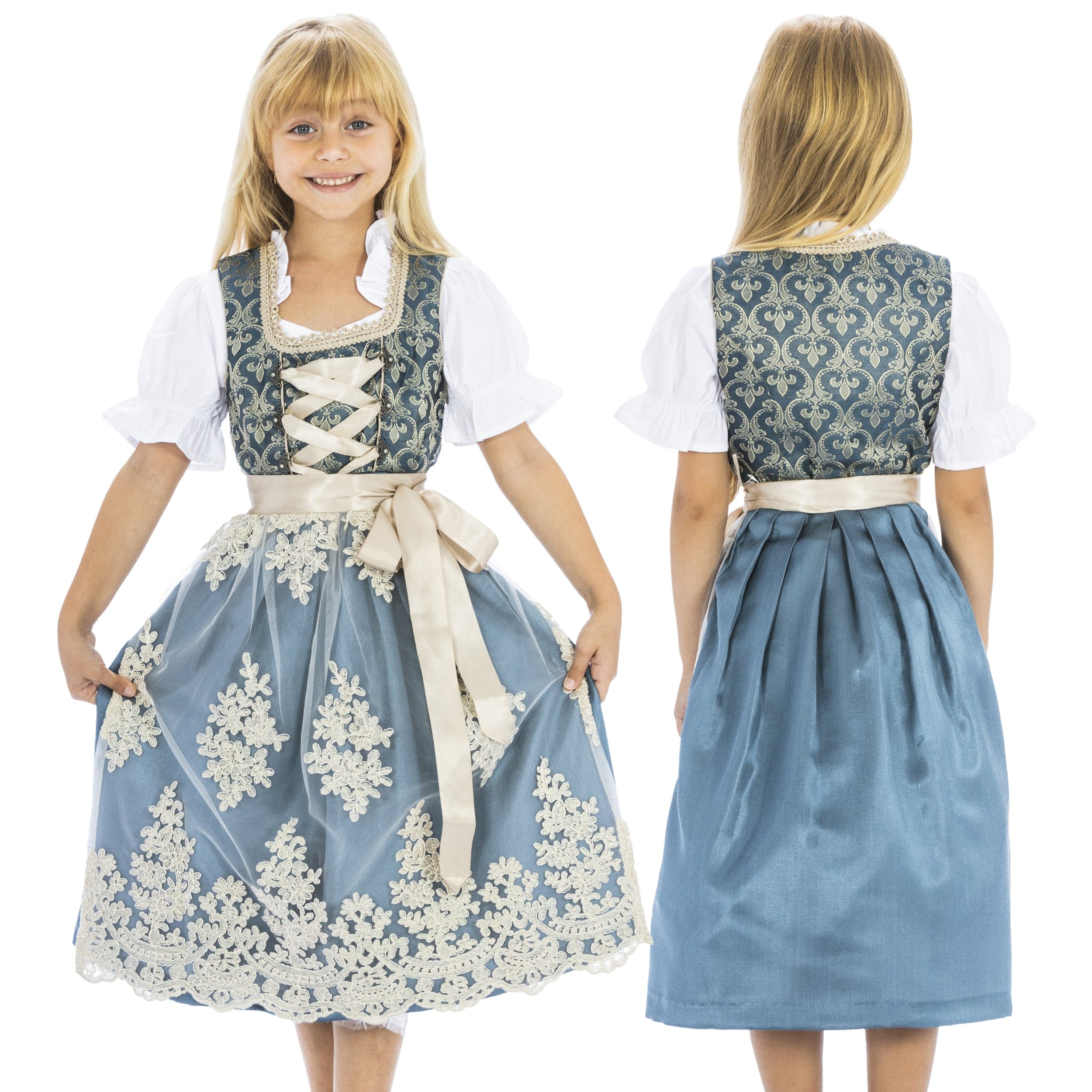
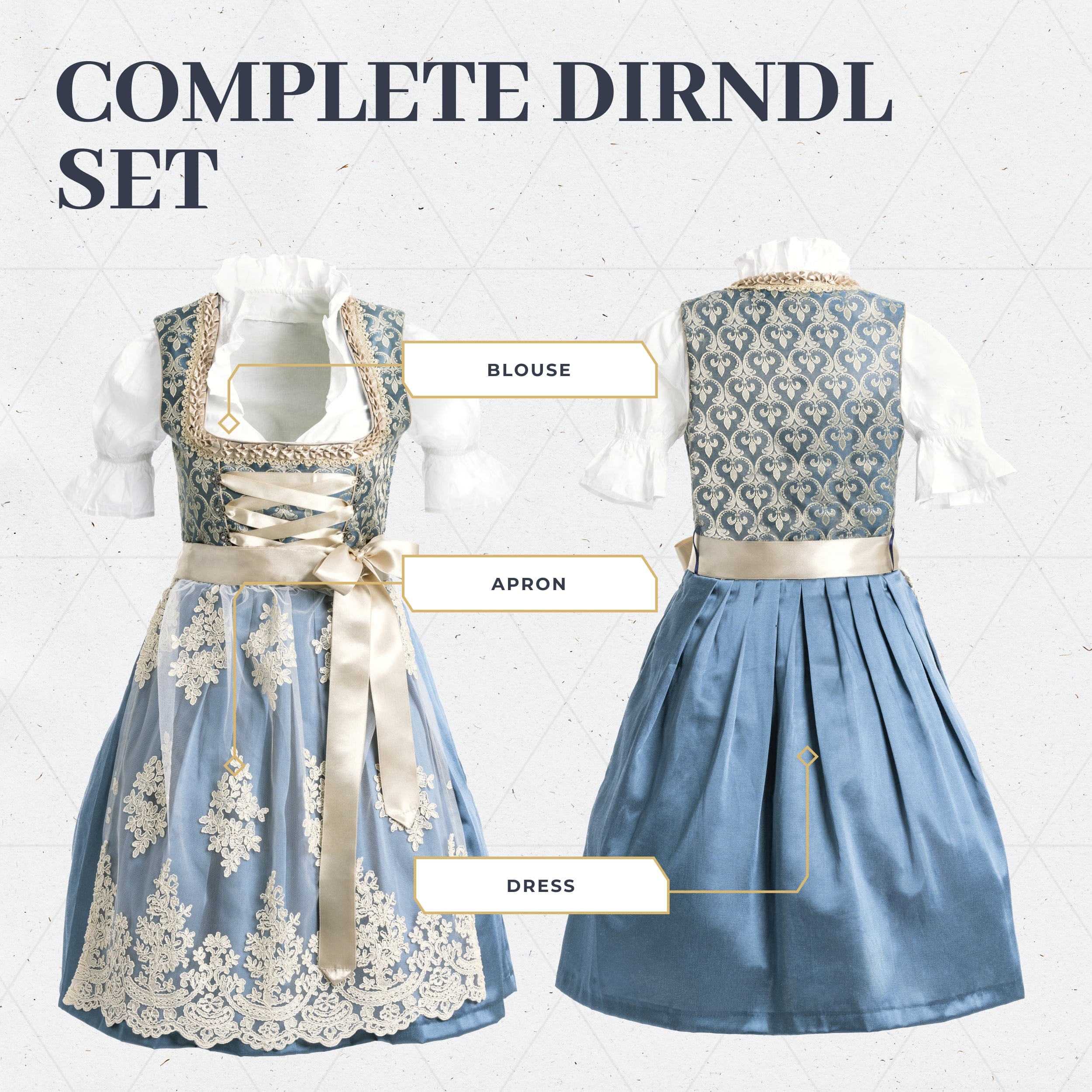
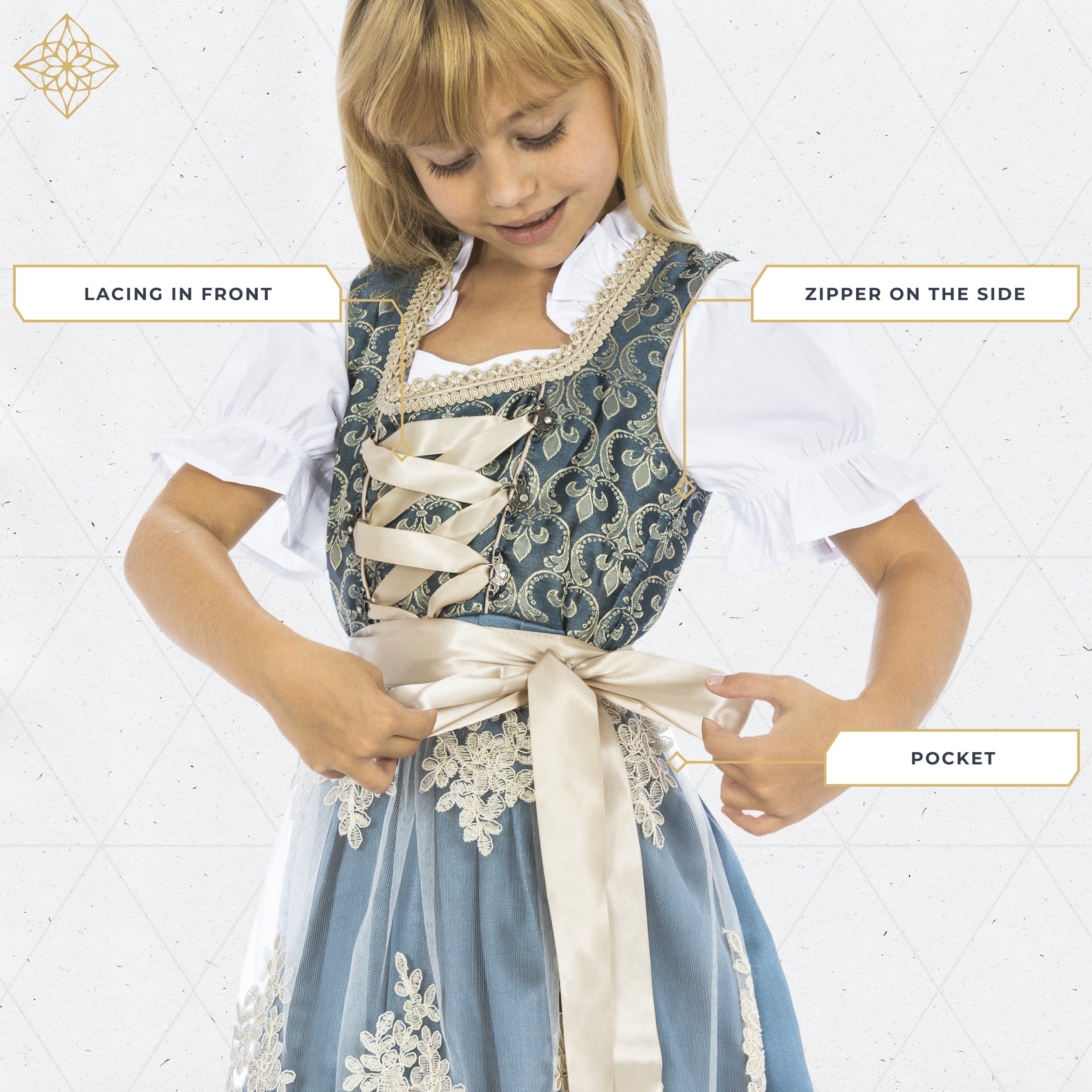
The Dirndl is the most iconic piece of traditional German women's clothing. Its classic silhouette consists of four key elements:
-
Bodice (Mieder) - A fitted, often corseted top with a square or sweetheart neckline.
-
Blouse (Dirndlbluse) - Worn beneath the bodice; traditionally white, in either short-sleeved or puffed-sleeve styles.
-
Skirt (Rock) - A full, gathered skirt that falls below the knee. Length varies by region and formality.
-
Apron (Schürze) - Perhaps the most symbolically loaded element. The position of the apron bow communicates relationship status:
-
Bow tied on the left = single
-
Bow tied on the right = married or taken
-
Bow tied at the back = widowed, waitress and kids
Regional Variations of the Dirndl:
|
Region |
Distinctive Feature |
|
Bavaria |
Bright colors, floral aprons, ornate bodice lacing |
|
Black Forest |
Dark wool skirt, white blouse with red pompom hat (Bollenhut) |
|
Salzburg |
More subdued colors, fine wool fabrics |
|
Bavarian Alps |
Heavy embroidery, silver buttons, longer skirts |
Men's Traditional German Clothing
Lederhosen
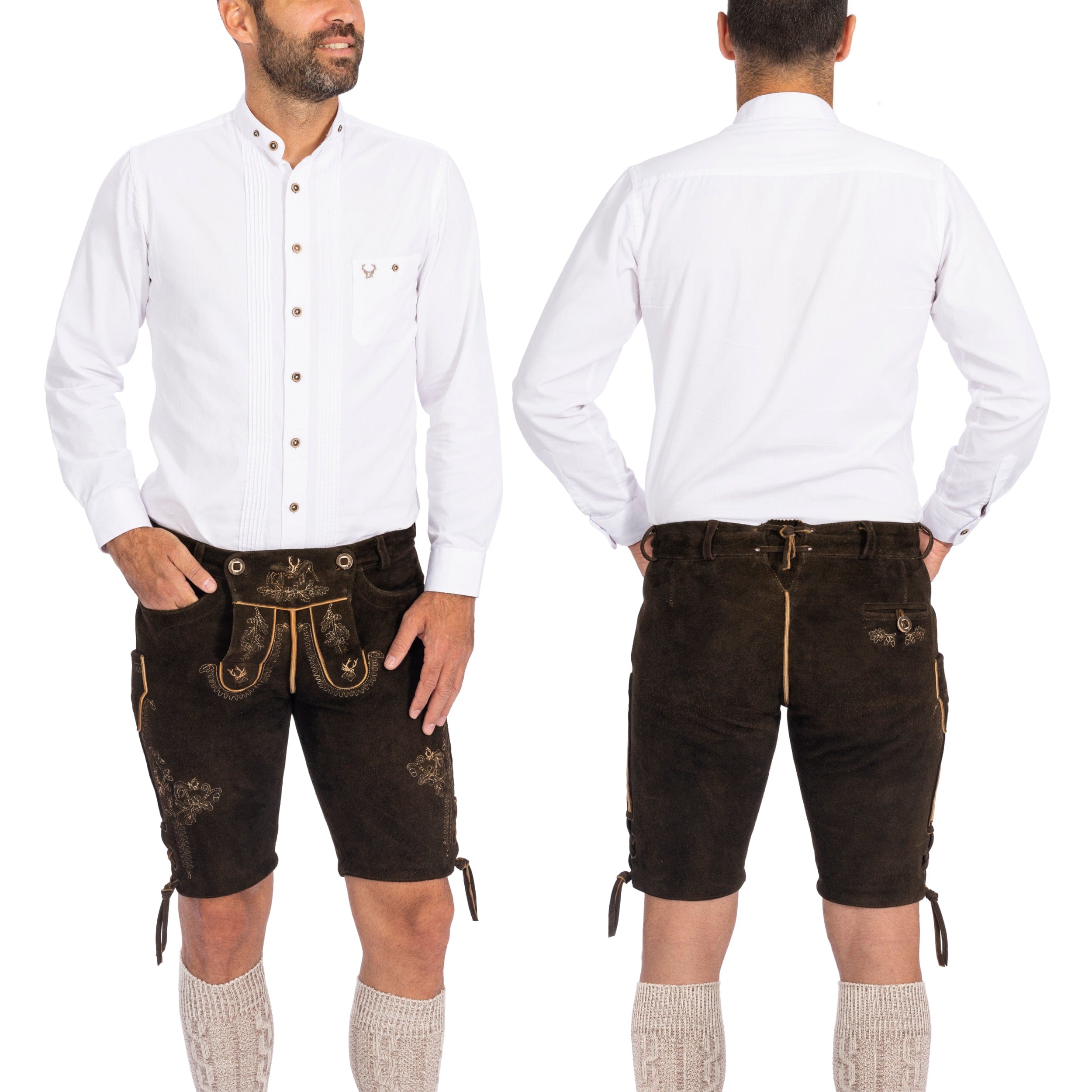
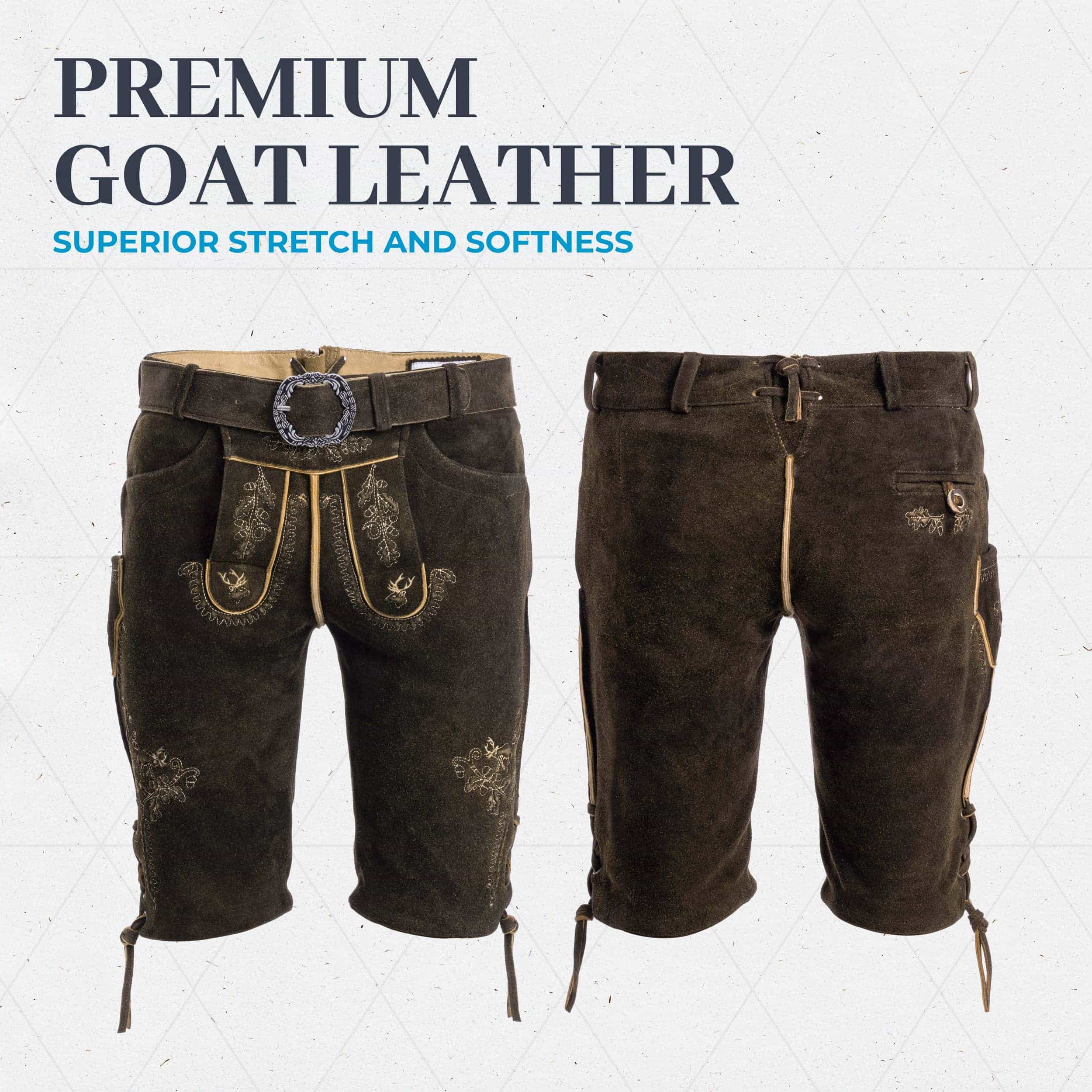
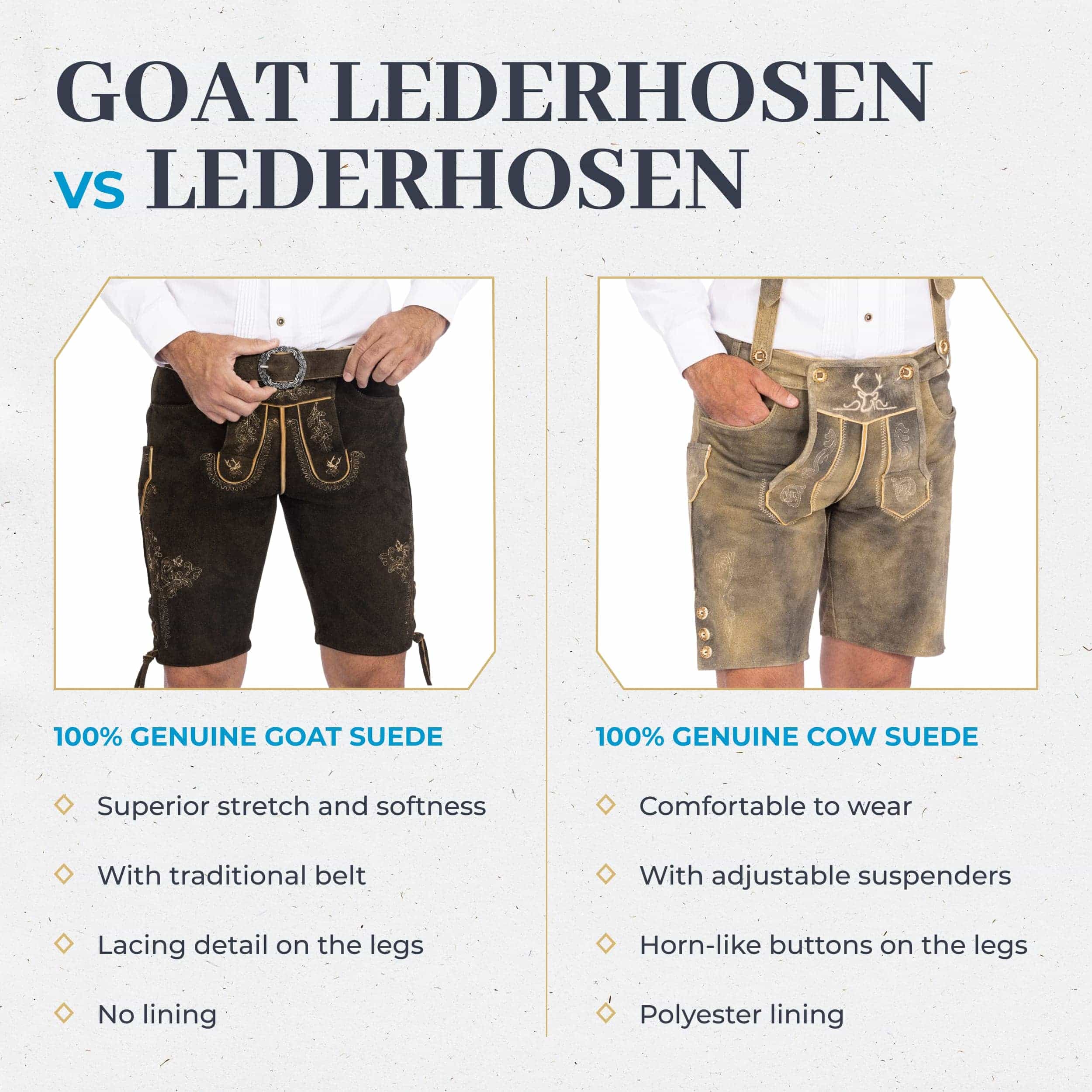
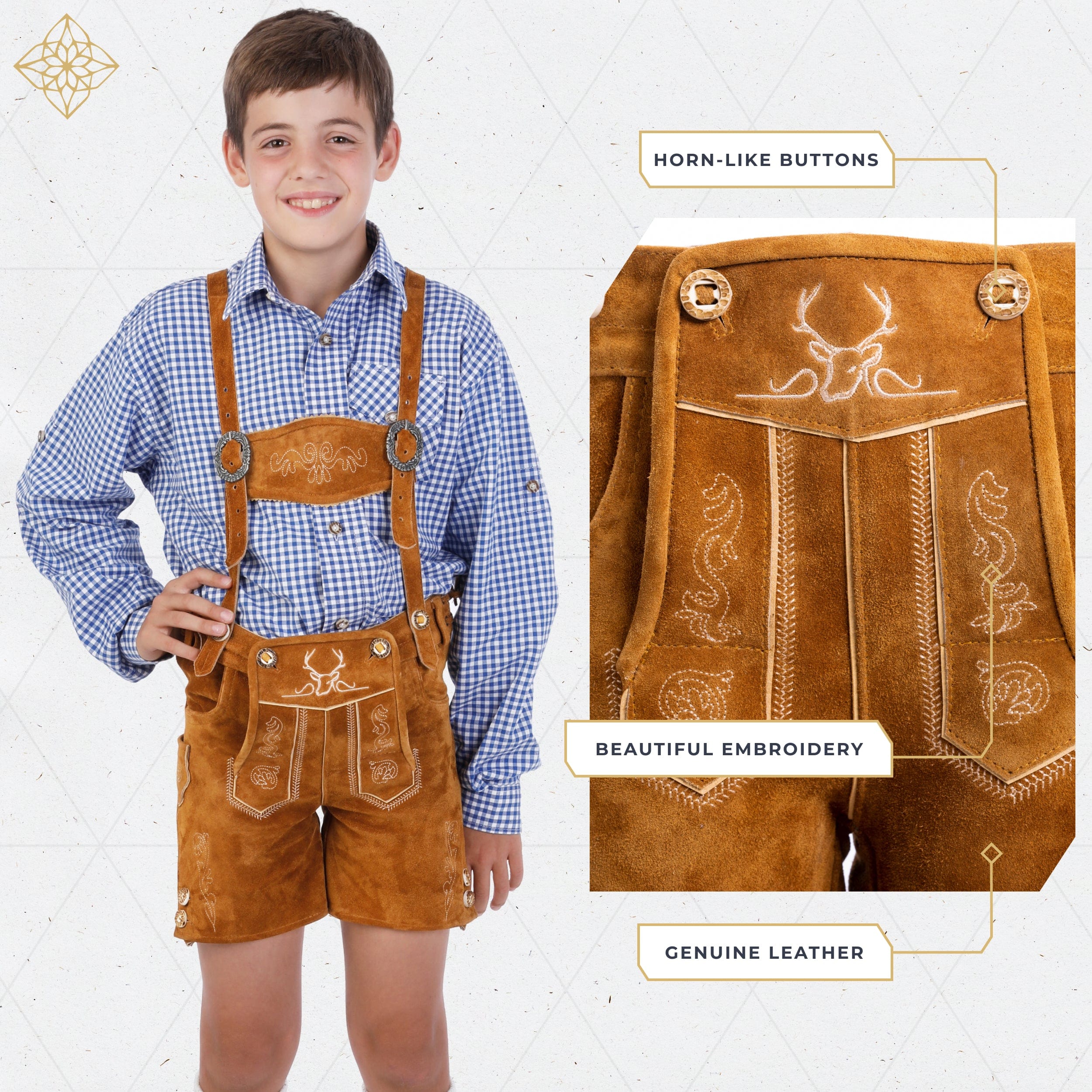
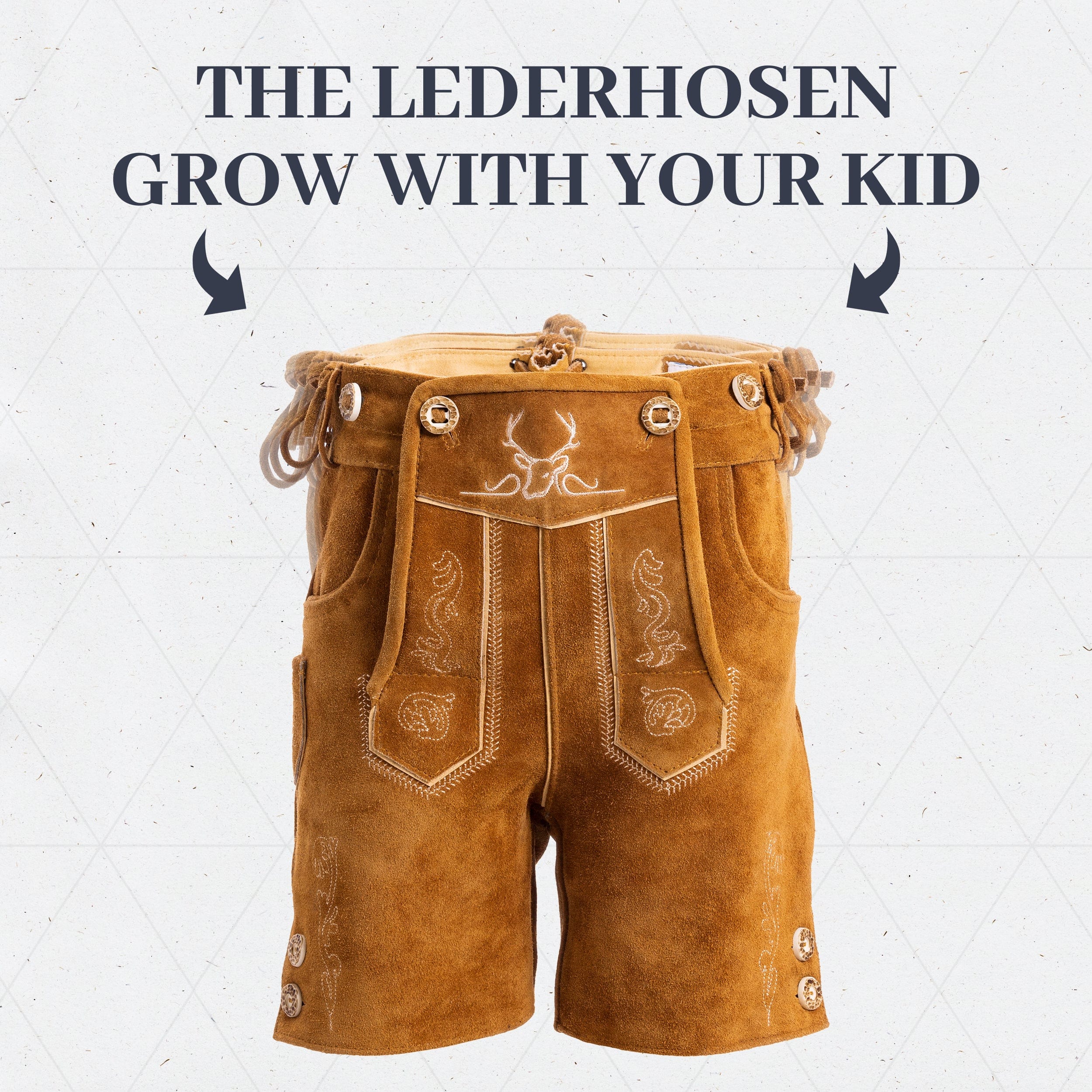
The Lederhosen ("leather breeches") are the defining element of the men's Bavarian outfit. Made from durable deer or goat leather, these knee-length breeches were originally working garments for Alpine farmers and hunters.
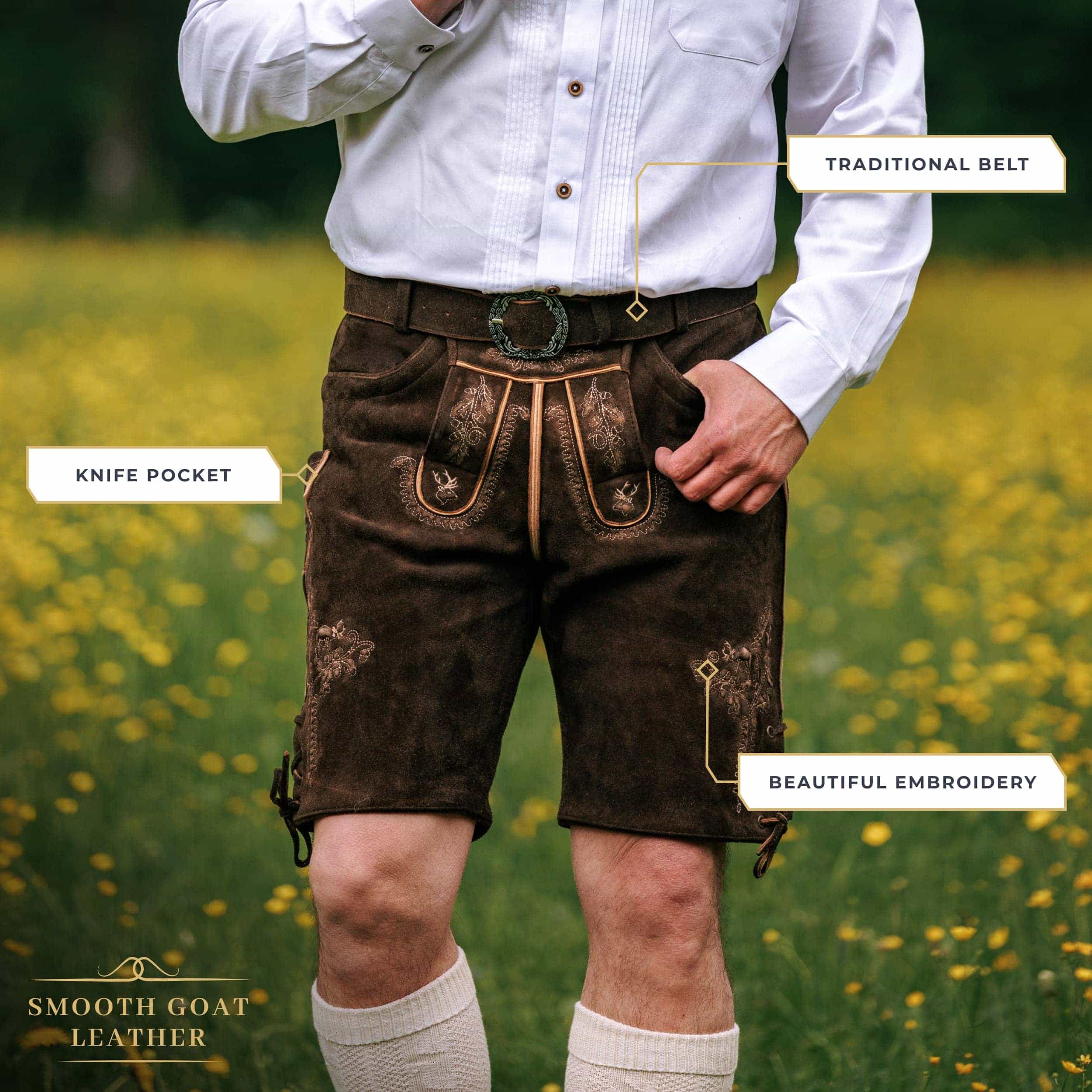
Key features of traditional Lederhosen:
-
H-strap (Hosenträger) - Embroidered suspenders in the shape of an H or Y
-
Front flap (Latz) - A decorative front panel, often embroidered
-
Knee-length cut - Traditional; shorter Kurze Lederhosen are summer festival variants
-
Embroidery - Typically depicting oak leaves, edelweiss, hunting motifs, or animals
Quality traditional Bavarian outfits feature hand-stitched embroidery and genuine leather that develops a patina with age, heirloom pieces passed between generations.
The Charivari
A prized accessory of the German Bavarian outfit for men is the Charivari, a decorative chain worn across the front of the Lederhosen. Hung with silver coins, animal teeth, boar tusks, and hunting trophies, the Charivari is a display of personal history and masculine achievement.
Traditional Shirts
Men's traditional shirts (Trachtenhemd) are typically:
-
White or blue-and-white checked (Kariert)
-
Made of linen or cotton
-
Featuring decorative buttons down the front
-
Worn with the collar open for a relaxed festival look
The Bavarian Jacket (Janker or Lodenjanker)
The Janker is a traditional woolen jacket, typically grey or forest green, worn over the shirt. Made from Loden, a dense, water-resistant wool fabric, it's practical for alpine weather and formal enough for festival occasions.
Hats
The Gamsbart hat, a Bavarian felt hat with a tuft of chamois hair (Gamsbart) mounted on the band, is the classic headwear of the traditional Bavarian outfit for men. Badge pins, edelweiss flowers, and feathers are popular additional decorations.
Regional German Traditional Clothing Beyond Bavaria
While the German Bavarian outfit dominates global perception, Germany's traditional clothing landscape is remarkably diverse:
Black Forest (Schwarzwald)
Women's dress here is distinguished by the Bollenhut headdress. The regional costume features a black velvet bodice over a red or black skirt, with intricate silver jewelry.
Friesland (Northern Germany)
Coastal Frisian dress is notably different, reflecting Danish and Dutch influences. Women wear elaborate gold and silver Kopfschmuck (head ornaments) and dark woolen skirts.
Sorbian Dress (Eastern Germany)
The Sorbs, a Slavic minority in eastern Germany, maintain one of the most vibrant living Tracht traditions, with distinctive colorful headdresses and embroidered aprons still worn to church and festivals today.
Rhine and Moselle Regions
Wine-growing regions developed dress reflecting their prosperity, fine silk aprons, elaborate lace, and jewelry incorporating grapevine motifs.
Traditional German Clothing at Oktoberfest
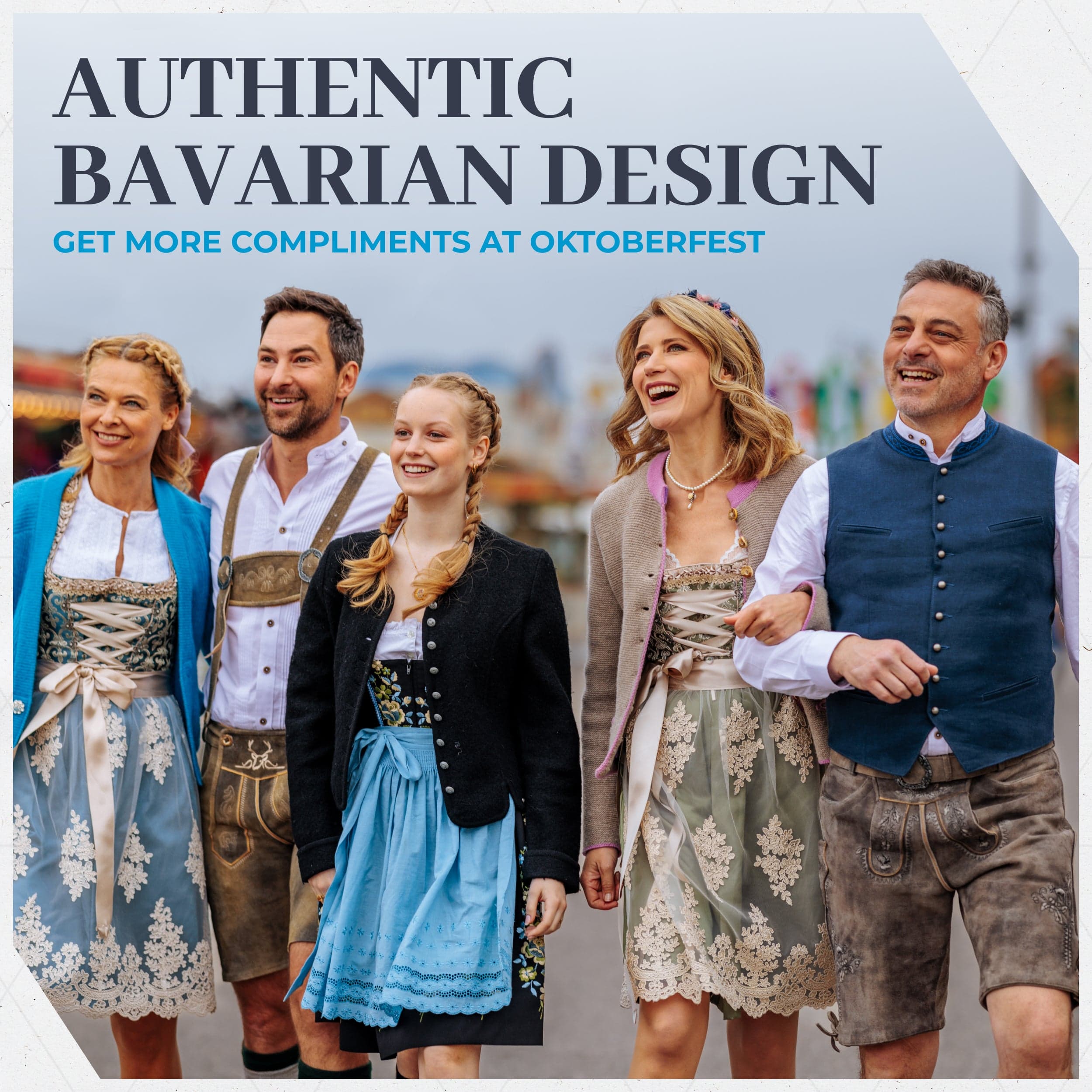
Oktoberfest, held annually in Munich, has become the world's most visible showcase for traditional German clothing. Originally a folk festival celebrating the 1810 wedding of Crown Prince Ludwig of Bavaria, it has evolved into a 16-day event drawing millions of visitors.
For women:
-
A traditional Dirndl (midi-length preferred for authenticity)
-
White blouse - puffed or short sleeve
-
Leather or velvet shoes with a low heel
-
Hair braided or pinned up
For women, avoid:
-
Mini Dirndls (not traditional)
-
Synthetic fabric cheap costumes
For men:
-
Lederhosen - knee-length
-
Checked or white Trachtenhemd
-
Haferlschuh (traditional grey leather shoes)
-
Lodenjanker jacket for cooler evenings
-
Optional: Bavarian hat with Gamsbart
Wearing Tracht to Oktoberfest is considered respectful and is warmly appreciated by Bavarians, it signals genuine engagement with the culture rather than mockery of it.
Traditional German Clothing in Popular Culture
Traditional German clothing history continues to influence global fashion and culture:
-
High fashion: Designers from Valentino to Vivienne Westwood have drawn on Dirndl silhouettes and Lederhosen textures
-
Film & TV: From Heidi adaptations to Babylon Berlin, German traditional dress appears across media
-
Global festivals: Oktoberfest events in cities from Sydney to São Paulo have created worldwide demand for traditional Bavarian outfits
-
Sustainable fashion: The Tracht revival aligns with slow fashion values, quality garments meant to last generations
Conclusion
Traditional German clothing is far more than a costume for tourists. It's a living thread connecting present-day Germany to centuries of regional pride, craft traditions, and cultural identity. From the meticulously embroidered men's Bavarian outfit to the elegantly symbolized traditional German women's clothing, every element of Tracht carries meaning.
Whether you're attending Oktoberfest, researching traditional German clothing history for academic purposes, or simply curious about the culture, understanding the Dirndl, the Lederhosen, and the rich diversity of German traditional clothing opens a window into one of Europe's most fascinating folk traditions.
The next time you see someone in a traditional Bavarian outfit, look closely, you're not just seeing a costume. You're seeing centuries of history, stitched together.
Bavaria Trachten is all about Oktoberfest, tradition, and showing up in style. With deep German roots, we create authentic Oktoberfest outfits that bring Bavarian culture to life for celebrations across the U.S. and beyond.
Popular Posts
Products mentioned on this page:



Get a $10 store credit for your first order
Products mentioned on this page:


Leave a comment